

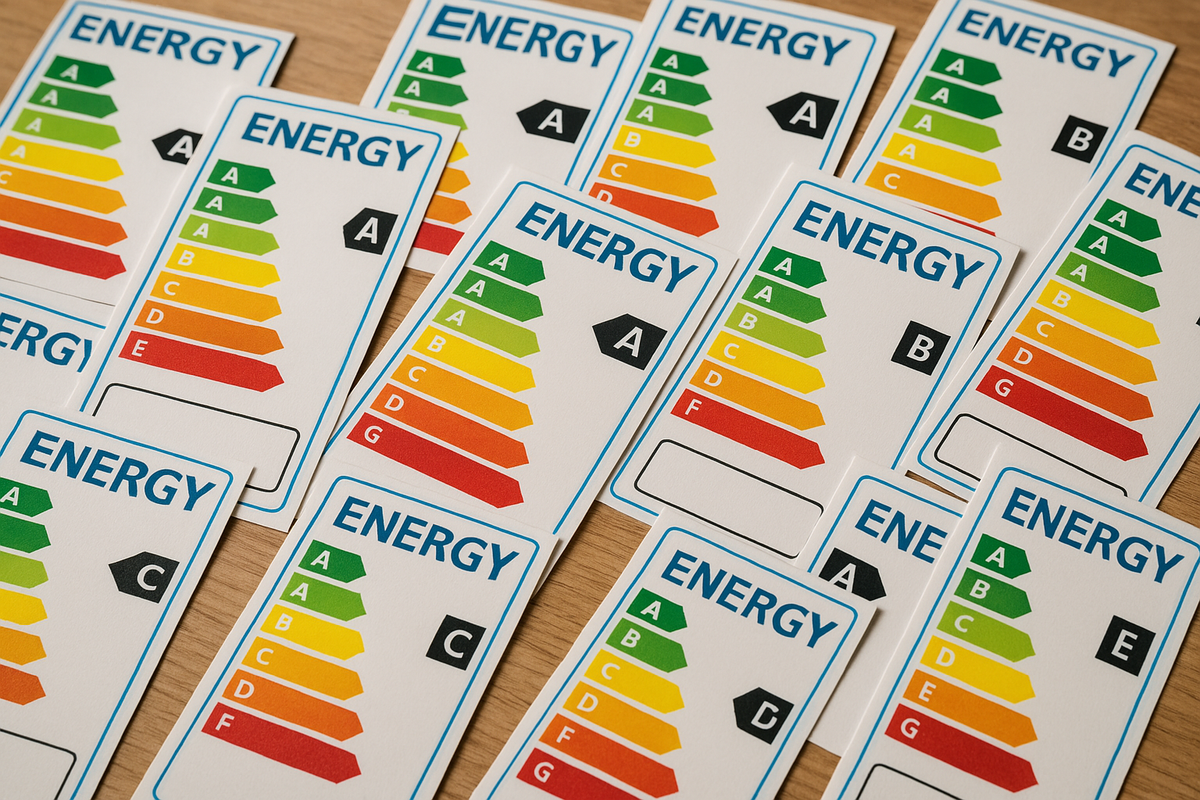
Explained: Energy Rating Labels
Energy labels are an essential tool for consumers, providing clear information about the energy efficiency of appliances.
Understanding these labels can help you make informed decisions that save both energy and money. In this guide we will explain what energy labels are, how they work, and why they matter - also we’ll highlight how we provide this data slightly differently than other retailers and our reasoning for this.
tl;dr
Energy labels provide standardised data on how much energy (and water if applicable) a product uses typically for every 100 cycles, they’re available to download from most product pages as PDF’s here at Renew 2 U and you can use the data provided in these labels to make educated decisions on the appliance you’re considering to purchase.
What Are Energy Labels?
Essentially, energy labels are standardised ratings displayed on products to indicate their energy consumption and efficiency.
They are typically required by law in many countries including here in the UK, they provide a simple way to compare different models within the same category. These labels help consumers identify products that use less energy and contribute to reducing carbon footprints.
How Do Energy Labels Work?
Energy labels use a rating scale, usually represented by a combination of colours and letters. The most common format includes:
-
A to G scale: ‘A’ represents the most energy-efficient products, while ‘G’ signifies the least efficient.
Note that for some appliances such as Tumble Dryers still have labels with ratings between A+ and A+++, these will be phased out as something having a better energy rating than A is nonsensical. - Colour coding: Green indicates high efficiency, while red denotes poor efficiency.
- Annual energy consumption: Displayed in kilowatt-hours (kWh), showing estimated yearly usage based on typical operation which is 100 cycles, the exception to this are ovens and cookers for which the energy consumption is shown per cycle.
- Additional information: Some labels include water consumption (for dishwashers and washing machines), noise levels, and performance features.
Why Are Energy Labels Important?
Energy labels provide several key benefits:
- Cost savings: More efficient appliances reduce electricity bills over time.
- Environmental impact: Choosing energy-efficient products helps lower greenhouse gas emissions.
- Informed choices: Consumers can easily compare models to find the best option for their needs.
Types of Energy Labels
Here in the UK you’ll come across two standards for energy labels, the EU Energy Label and the UK Energy Label, they are both essentially the same - we here at Renew 2 U mostly provide just the EU labels, simply because they’re indexed as part of the EPREL database.
This resource is widely supported by all manufacturers and kept up-to-date as models are updated and requirements change manufacturers, and their ID’s can be used elsewhere making them more efficient to deploy whereas the time of writing no such system exists for the UK equivalents.
Examples


Conclusion
Understanding energy labels allows you to make more eco-friendly and cost-effective decisions when purchasing appliances. By choosing refurbished products you are already reducing your carbon footprint and if you choose to factor in efficiency ratings, you can make further reductions through lower energy consumption and save even more money in the long run.
By familiarising yourself with energy labels, you take a step towards a more sustainable future while ensuring that your home runs efficiently and economically.
Label Updates
As time goes by and technology improves, the requirements for each energy rating band are made most stringent, this is why you can sometimes see retailers listing appliances as being "A rated" or "A+++ rated", but if you actually go check the appliance database directly, you'll find it could be a B, C or lower.
The energy labs we provide a captured at the time of data entry into our system, sometimes when we update popular models we will check and update the specifications accordingly.
Label Availability
Energy labels are widely available throughout the store for both Refrigeration and Laundry appliances - support for cooking appliances is a bit more patchy, we have support for labels or any ovens, cookers, range cookers, and hoods however, appliances, such as hobs and microwaves are not supported.
If you come across any products which doesn’t have a downloadable PDF energy label available then get in touch with us and we’ll both provide you with the label and update the product to support it.
Read more
In a world where environmental concerns are at the forefront of our collective consciousness, the importance of sustainability cannot be overstated.
Whether you’re whipping up a quick midweek dinner or preparing a weekend roast for the whole family, you need a machine that’s reliable and efficient and here at Renew 2 U we can help you find prem...